What does Vanitas mean?
Vanitas is a still-life painting of a 17th-century Dutch genre containing symbols of death or change as a reminder of their inevitability.
What were the intentions behind Vanitas artworks?
A vanitas painting contains accumulations of articles representative of the certainty of death and the short life and vanity of natural accomplishments and delights; it admonishes the watcher to think about mortality and to atone.
How do Vanitas artists use symbolism in their work? Give some examples of the common symbols used.
Vanitas artists use symbolism to convey hidden messages towards the audience. Basic vanitas images incorporate skulls, which are a token of the conviction of death; spoiled organic product (rot); bubbles (the quickness of life and suddenness of death); smoke, watches, and hourglasses (the curtness of life); and melodic instruments (quickness and the vaporous idea of life).
What are the key visual characteristics of Vanitas art?
Visual attributes help in emphasising the messages that the Vanitas specialists are attempting to pass on. Some key attributes of Vanitas workmanship incorporate dull foundation (vacancy of death), unforgiving lighting (juxtaposition with the dim foundation) and the emblematic objects of death.
How have you recreated these in your still life photography practice?
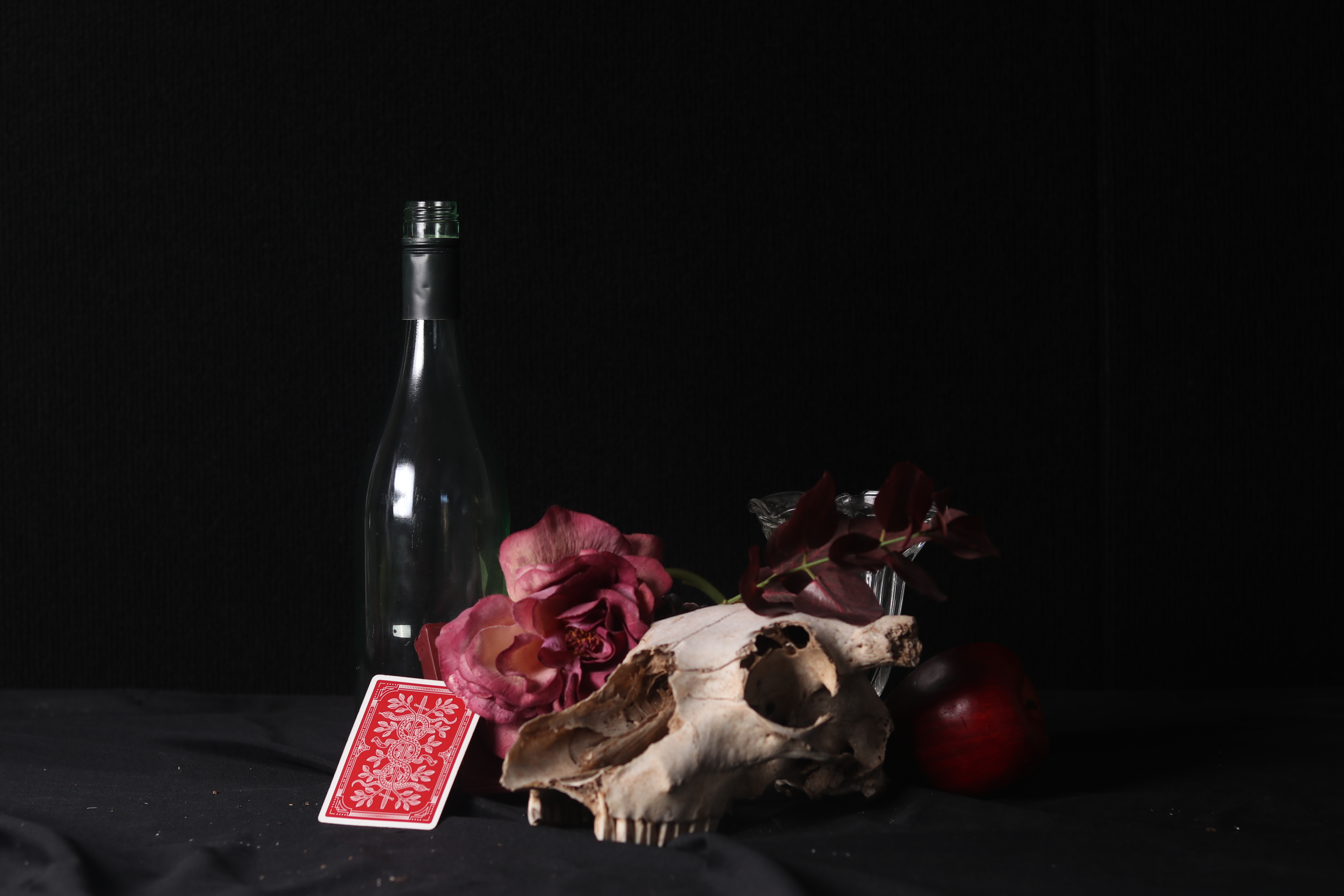
In this photo, the dark background represents the darkness and emptiness of death, which is then juxtaposed by lighting coming in from the left side. The skull and dead flower represent death and the ending of life which is then accentuated by the empty liquor bottle and playing card.
 Oscar's fiesta